CSU East Bay · Music Department
MUS 302 · What to Listen for in Music
Module 5: European American Immigrant and Working-Class Traditions · Listening Guide · Track 3 of 5
Track 3 The Drifters, "Up on the Roof" (1962)
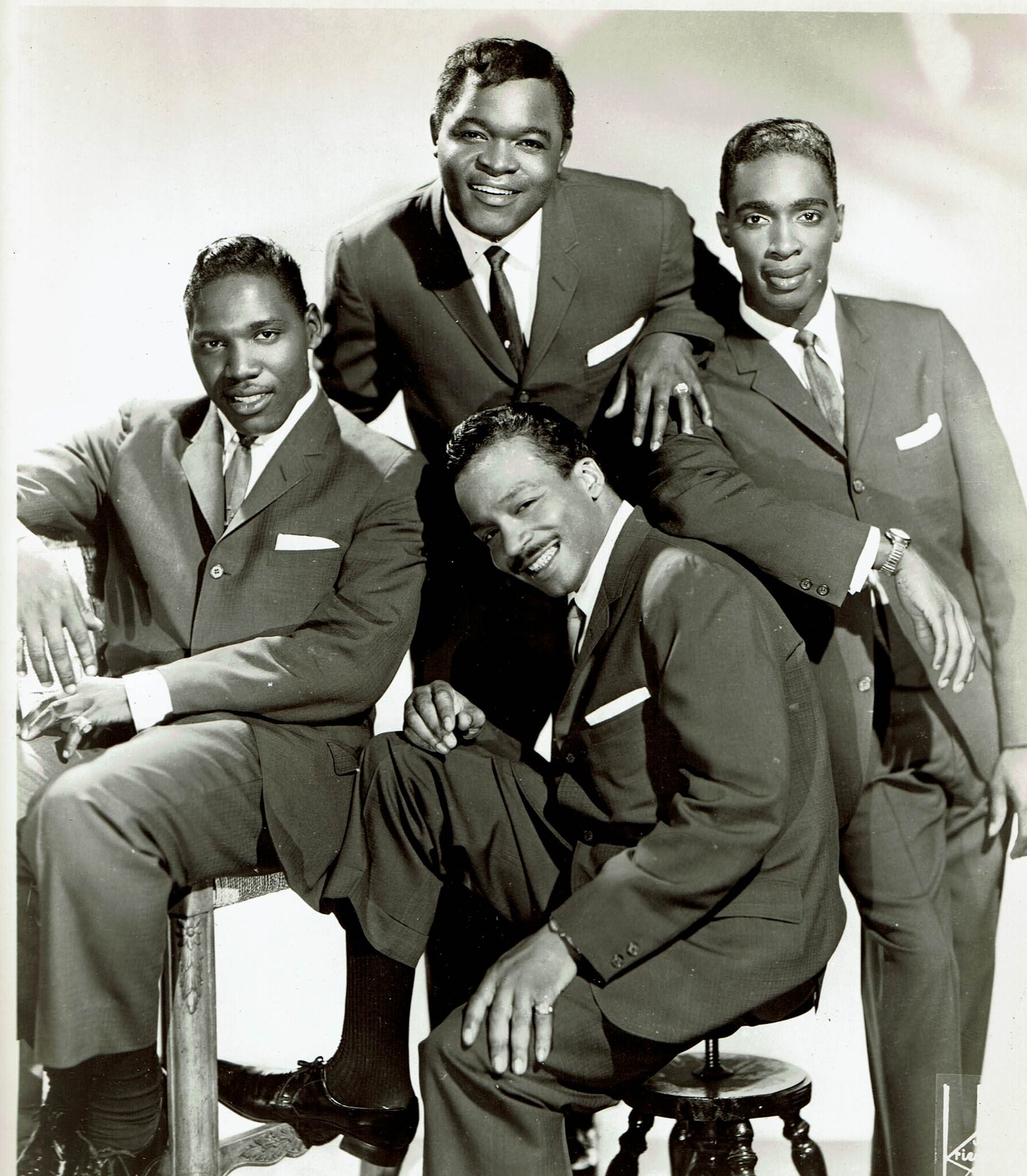
Context
A name that belonged to someone else
The four men singing on this recording did not own the name . They had no rights in it. They could not have continued using the name if they had left the group, and they had no claim on its commercial value. The name was the personal property of their manager, , who had bought out the founding lead singer 's half-share in 1955 when McPhatter was drafted into the U.S. Army, and who from that point forward held the trademark, paid the singers weekly wages, and decided who was in the group and who was out. The arrangement was unusually explicit in the music industry of its day. Most vocal groups of the 1950s and 1960s operated under management contracts that disadvantaged the singers; few were structured as a single owner employing a rotating cast of interchangeable voices, with the singers receiving no share of record royalties, no share of songwriting royalties, no share of the publishing income, and no rights in the name that made the recordings sellable.
The shape of that arrangement is the structural fact of "Up on the Roof." It is the reason there are two distinct Drifters lineups across the group's first decade of recordings: the original McPhatter-era group of 1953 through 1958, and the second group built around from 1959 forward. The transition happened on a single night. In May 1958, after months of mounting friction, Treadwell fired the entire singing lineup of the original Drifters at the Apollo Theater, and on the spot hired most of the Five Crowns (the group that had been opening for the Drifters on the same bill that night) to become the new Drifters. The new group inherited a year of bookings, the recording contract with , and the name; the singers Treadwell fired walked out with nothing but their personal earnings to that point. The pattern repeated in smaller ways across the rest of Treadwell's life. When Bill Pinkney had asked for a raise in 1958, Treadwell fired him; when Ben E. King asked for a raise in 1960, after singing lead on the four hits that had made the new Drifters commercially viable ("There Goes My Baby," "This Magic Moment," "Save the Last Dance for Me," "I Count the Tears"), Treadwell refused, and King left for a solo career. The published account of Treadwell's management, drawn from interviews with multiple former members, includes the report (from Drifters biographer Billy Vera) that the singers in the group referred to him privately as "Stingy Treadwell" and, in harsher moments, as "a pimp." Treadwell was African American himself, a former big-band trumpeter and the husband of , and the arrangement he ran is not reducible to the white-music-industry-extracting-from-Black-performers story this module has been tracking. It is, however, the local infrastructure on which the racialized credit and royalty dynamics of the broader system operated, and it is what shaped every Drifters recording across the group's commercial peak, including this one.
Goffin and King write a song about a roof
The song was written across an afternoon in the early summer of 1962 in a piano-equipped cubicle at , the Don Kirshner and Al Nevins publishing company at 1650 Broadway. was twenty. was twenty-three. The two had been married, in a Jewish ceremony on Long Island in August 1959, after Carole became pregnant; they had quit college, taken day jobs (Goffin as an assistant chemist, King as a secretary), and signed to Aldon Music together in 1960. They had a top-of-the-charts hit out of the gate ("Will You Love Me Tomorrow" for , the first number-one Billboard Hot 100 single by an African American girl group, in November 1960) and had been writing singles for Black and white vocal groups continuously since.
The story of "Up on the Roof," which they have both repeated in interviews across the rest of their lives, is that King came up with the melody while driving home from Aldon one afternoon. She gave it to Goffin to put a lyric to and suggested the working title "My Secret Place." Goffin liked the focus of a haven but not the title; he was a West Side Story fan (the 1957 Bernstein-Sondheim-Laurents-Robbins , then in its long Broadway run with the 1961 film adaptation just released and sweeping the Academy Awards), and the rooftop scenes in West Side Story gave him the image of a New York tenement roof as the secret place. The song was finished that day. Goffin would later say in interviews that "Up on the Roof" was his favorite of all the lyrics he had written. King would later cover the song herself on her 1970 album Writer; James Taylor would carry it back to the pop charts in 1979.
The lyric is in two halves. Verse one says: when this old world gets you down, the roof is the way out. Verse two says: the roof has stars and air and quiet, and nobody can find you up there. The chorus is the geographical claim: "right smack dab in the middle of town, I've found a paradise that's trouble proof." The paradise is, literally, a tar-papered roof in a working-class Manhattan neighborhood, three or four flights of unlit stairwell above the apartment. Goffin and King were both born and raised in Brooklyn working-class Jewish families; the rooftop they were writing about was the rooftop of a building their families had lived in, or in buildings two blocks away. The "paradise" of the lyric is the small, private, unauthorized place on top of a building that nobody in the building's official architecture intended to be a place at all.
At the moment Goffin and King finished the song, nobody had recorded it and nobody was yet contracted to. Aldon was a music publisher, not a record label: Aldon owned the song itself (the copyright on the words and the melody) but did not own any recordings of it. The next step was up to Aldon's pluggers, whose job was to take a piano-and-voice demo of the song around the offices of the New York record labels until a label agreed to record it with one of its artists. Goffin and King had a close working relationship with Atlantic Records' staff producers and (two of the most important record producers in American popular music), so the demo of "Up on the Roof" probably did not have to travel far. Leiber and Stoller had been producing the Drifters' singles for Atlantic since 1959, they heard the demo through Aldon, and they decided the song fit the Drifters' current lineup. The arrangement that resulted was a three-party split that the listening guide will keep coming back to: Aldon Music owned the song. Atlantic Records owned the recording. George Treadwell owned the singers. The four men whose voices carried the record into the American pop chart owned none of the three.
Rudy Lewis from the Clara Ward Singers
, the lead singer of "Up on the Roof," was born Charles Rudolph Harrell in Philadelphia on August 23, 1936, and grew up in the city's Black -music scene of the 1940s and early 1950s. By his late teens he was singing with the , the most commercially important Black gospel ensemble of the 1950s, as one of only two men ever in the group. Clara Ward herself, the lead and musical director, was the dominant gospel voice of her decade; her arrangements of traditional and her improvisatory melismatic style shaped most of the gospel-trained and singers who came up alongside her ('s father, the Detroit preacher C.L. Franklin, was a close friend of the Wards, and the young Aretha sang at the Ward family's Philadelphia gatherings through her teens). Lewis was inside the same room as that vocal tradition, on the same touring circuit, recording for the same gospel labels, for nearly the entire run of his early adult life.
He was singing with Clara Ward at Philadelphia's Uptown Theater in late 1960 when he learned that the Drifters were also playing the same theater the next week and that the group's manager, George Treadwell, was hearing auditions for a new lead. King had just left. The group had been reduced to a trio, with Charlie Thomas singing lead temporarily, and Treadwell needed a replacement urgently. Lewis went to the audition on the day after his last Clara Ward performance, sang for Treadwell, and was hired on the spot. He moved to New York at twenty-four and began touring with the Drifters within weeks. The four hits Lewis sang lead on between 1961 and 1963 ("Please Stay," "Some Kind of Wonderful," "Up on the Roof," "On Broadway") sit inside the most concentrated Drifters commercial run of the entire post-Treadwell-takeover era; he was the lead voice of the group through their commercial peak as a Brill Building act. He was paid the standard salaried wage Treadwell paid all the Drifters singers, with no share of the royalties on any of the four hits.
The voice you hear on "Up on the Roof" is the gospel-trained baritone Lewis brought out of three years with the Wards. That voice carrying the Goffin and King lyric, over the Leiber and Stoller production, is the recording's central artistic fact. Lewis would die three years later, on May 20, 1964, in his Harlem hotel room on the night before the Drifters were scheduled to record "Under the Boardwalk," which had been written for him. He was twenty-seven. Authorities ruled the death a probable drug overdose without conducting an autopsy. Billy Vera, in the 1996 liner notes to the Drifters box set Rockin' and Driftin', was the first to publicly identify Lewis as a closeted gay man, a heroin user, and a sufferer from binge-eating disorder; the information had been kept private during his lifetime and for thirty years afterward. Johnny Moore took over the lead vocal on "Under the Boardwalk" the day after Lewis's body was found; the session went forward as scheduled.
The session, June 28, 1962
The Drifters recorded "Up on the Roof" at the Atlantic studios on West 56th Street on Thursday, June 28, 1962. The session was produced by Jerry Leiber and Mike Stoller, the Jewish American songwriter-producer team Atlantic's Ahmet Ertegun had brought in to produce the second Drifters lineup four years earlier. The arrangement and conducting were by , Leiber and Stoller's regular orchestral arranger on the Drifters sides. The vocal lineup was Rudy Lewis on lead, on harmony tenor, on bass, and (overdubbed onto the same session a few days later) on baritone, brought in to replace Dock Green, who had departed the group right after the session.
Behind the four singers, Leiber and Stoller assembled a fifteen-piece band. Carole King herself played the piano part she had written that afternoon at Aldon; the regular Atlantic session pianist Ernie Hayes doubled the part. The guitars were Bob Bushnell, Al Casamenti, and Don Arnone; the bass was (one of the most-recorded bassists of the era); the drums were the legendary , the studio drummer behind most of the Drifters Atlantic singles and several hundred other early-1960s New York pop recordings; the percussion was Bobby Rosengarden and George Devens, including the and the small handheld -derived rhythm pattern Stoller had been writing into Drifters productions since 1959. Then a four-piece brass section (Jimmy Sedlar and Jimmy Nottingham on trumpets, Jimmy Cleveland and Frank Saracco on trombones), and on top of all of that the string section that gives the recording its surface texture: a small group of violins and a cello, scored by Sherman, voiced to sit just above the vocal harmony and to take over the register the tenors had occupied on earlier vocal-group records.
The production approach was not new for Leiber and Stoller. They had built it on the Drifters' 1959 single , the first commercial R&B recording to put a string section behind a Black vocal group, and Stoller has said in interviews that he had heard the Brazilian baion rhythm on a 1956 trip to Latin America and decided immediately that it belonged on a Drifters record. Atlantic's Jerry Wexler heard the playback of "There Goes My Baby" and is reported to have called it "dog meat" and to have said it sounded like a radio caught between two stations; he and Ahmet Ertegun considered the recording unreleasable, but Leiber and Stoller had earned the trust their commercial track record with and the Coasters had bought them, and the record was released against Wexler's objections. It reached number two on the . From that point forward, the string-section-plus-vocal-group-plus-baion-rhythm production was the formula every subsequent Drifters Atlantic single ran through, including "Up on the Roof."
The single, backed with "Another Night with the Boys," was released on September 17, 1962, as Atlantic 2162. It entered the Billboard Hot 100 on November 3 at number 93, climbed across the next two months, and peaked at number five in the first week of February 1963; it reached number four on the R&B chart. Sales passed a million copies inside its first year. The song has been covered continuously across the six decades since: by Little Eva on her 1962 album L.L.L.L. Loco-Motion (recorded before the Drifters but released after), by Kenny Lynch and Julie Grant in the UK in 1962, by Laura Nyro on her 1970 album Christmas and the Beads of Sweat, by King herself on her 1970 album Writer, by James Taylor on his 1979 album Flag (where it reached number twenty-eight on the Billboard Hot 100 as a single), and by dozens more. The Drifters' original is the version that lives on the oldies radio circuit and the version this listening guide is built around. Rolling Stone placed it at number 114 on the 2010 revision of its 500 Greatest Songs of All Time list; the Rock and Roll Hall of Fame includes it on its 500 Songs That Shaped Rock and Roll.
Things to listen for
The song is in the key of A-flat , in , at a of about 122 (a moderate walking pulse, slightly slower than the Lymon recording on Track 1's 174 BPM eighth-note feel). The harmonic vocabulary of the verses is built on the same I-vi-IV-V cycle as "Why Do Fools Fall in Love" (in A-flat: A-flat, F minor, D-flat, E-flat). At the end of each verse, the V chord hangs for two bars over a held lyric line ("drift right into space," "rat-race noise down in the street") before the chorus opens on the IV chord. The chorus itself runs IV-I-iii-IV-V (D-flat, A-flat, C minor, D-flat, E-flat). The runtime is 2 minutes 37 seconds. Personnel: Rudy Lewis (lead vocal), Charlie Thomas (tenor harmony), Tommy Evans (bass), Gene Pearson (baritone, overdubbed), with Carole King and Ernie Hayes on piano, Bob Bushnell and Al Casamenti and Don Arnone on guitar, George Duvivier on bass, Gary Chester on drums, Bobby Rosengarden and George Devens on percussion, Jimmy Sedlar and Jimmy Nottingham on trumpets, Jimmy Cleveland and Frank Saracco on trombones, and a small unidentified string section, arranged and conducted by Garry Sherman, produced by Jerry Leiber and Mike Stoller. Two things to bear in mind across these prompts: the song is in the same I-vi-IV-V tradition as the Lymon recording six years earlier, and the entire production above the vocal harmony, including the strings, the kettledrum, the brass, and the baion-derived percussion pattern, is the architecture Leiber and Stoller had been refining on Drifters singles since "There Goes My Baby" in 1959.
First, the of Rudy Lewis's voice. Lewis sings the song in a that sits noticeably lower in his range than the equivalent or Ben E. King leads; this is a chest-resonant voice with the forwardness, the deliberate , and the controlled of a singer trained in the Sunday-morning Black gospel tradition. Listen to the front of the first vocal line, "When this old world starts getting me down." Lewis attacks the word "when" with a small upward scoop into the pitch, a gesture you would hear from any gospel-trained soloist of his generation; the consonants on "getting me down" are softened and rolled forward in a way that gospel preachers would call filling the room with the voice. The recording's emotional center of gravity is the moment in the second chorus when Lewis lifts the line "I keep a-tellin' you" with a slight raspy edge at the top of his range, the same controlled rasp gospel soloists use to signal that what is being said next is the important part; the same edge is audible again on "right smack dab in the middle of town." Compare this to Sam Cooke on Module 1's Track 1: the same gospel-into-pop vocal tradition, the same controlled use of melismatic ornament for emphasis, the same emotional gathering of the voice toward a syllable that carries the line's weight. The Brill Building songwriting machine could buy Black gospel voices but it could not manufacture them; Lewis brought the timbre with him from Clara Ward.
Second, the , and what the production added on top of the vocal group. On a 1955 doo-wop recording like Track 1's, the texture is built almost entirely on the four backing voices behind the lead, with a small horn-and-rhythm section underneath. On "Up on the Roof," Sherman's takes over the high-frequency space the backing harmony tenors used to occupy: the strings enter on the first verse with a sustained held note above the vocal harmony, and through the rest of the recording they answer Lewis's vocal phrases with short legato responses that sit just above the harmony group's range. Underneath, the runs the baion-derived pattern Stoller had imported from Brazil: a strongly emphasized first of each , a quiet second beat, and a syncopated push into beat three that gives the recording its forward lean. Listen also for the kettledrum, which enters on the second verse as a long, low-pitched rumble underneath the rest of the band; it had been unheard on R&B records before Leiber and Stoller's 1959 "There Goes My Baby" session. The texture is doing something the Lymon recording did not have to do, because the texture is replacing one historical thing (the doo-wop saxophone solo and the four-voice harmony in the foreground) with another (the small chamber-orchestra string section and a more layered rhythmic foundation). The vocal group has not gone away; it sings the answer phrases throughout (the "up on the roof" tags after each chorus line, the harmony swelling on the title repetition at the close) but it is no longer the recording's whole sonic body.
Third, the , and how the song is the same shape as Track 1 with the surface re-painted. The harmonic engine of the verses is the I-vi-IV-V cycle, the same "fifties progression" that drives "Why Do Fools Fall in Love" six years earlier. Track the cycle as you listen: every four bars the chord pattern returns to the top. The melody Carole King wrote sits on a small number of repeated melodic figures over that cycle (the descending "when this old world" gesture in the verses, the rising "up on the roof" tag at the chorus). What the song does differently from the Lymon recording, formally, is the way it gets from the verse to the chorus. Rather than running the I-vi-IV-V cycle around again, the V chord hangs for two bars at the end of each verse ("drift right into space," "rat-race noise down in the street," "share it all with me"); that two-bar hover on the dominant is the song's structural breath, a held tension that the chorus releases by opening on the IV chord ("On the roof, it's peaceful as can be"). The chorus then runs IV-I-iii-IV-V before circling back into the next verse. The form is, in this sense, the lyric's geography: the verse is the street, the held V chord is three flights of unlit stairwell, and the IV that opens the chorus is the moment of stepping out onto the roof.
Fourth, the of the recording as a meeting of multiple traditions arriving on a single record. The Lymon recording on Track 1 sat inside a single texture, the four-voice doo-wop harmony of three Black and two Puerto Rican boys from one street in . "Up on the Roof" carries the four streams the diagram above lays out, and from a listener's point of view they organize into two textures heard at the same time. On the surface is the orchestral pop the Brill Building writing was producing for the white-audience market: the string section, the kettledrum, the discreet rhythm section, the recognizable mid-1960s "sound" of the Atlantic singles that built the Drifters' commercial peak. Underneath is the Black gospel singing tradition that came up out of Clara Ward and through Lewis: the forward placement of the voice, the melismatic emphasis, the controlled vibrato, the rasp at the top of the range. The recording is not the same thing as either of those textures on its own. It is the meeting place, and the meeting is structured by the institutional asymmetry Figure 1 and the system-explainer paragraph above already named: the writers, the producers, the arranger, and the manager owned everything, the singers owned nothing. The gesture audible on the recording is the gesture of those traditions encountering each other inside that structure. Lewis sings the Goffin and King lyric as if it is something he might himself have written; the Goffin and King lyric, written by two Brooklyn-born Jewish twenty-somethings about a rooftop they had grown up under, is sung by a Philadelphia-born Black gospel singer whose family had lived in the same kind of building. The political content of the recording, like Track 1's, is in the sound rather than the lyric. The lyric is about a roof. The sound is about an industry.
The same gesture has an audible afterlife in the cover history. The song has been recorded by white singers (Kenny Lynch in the UK in 1962, James Taylor in 1979, Neil Diamond, Billy Joel), by gospel-trained Black singers (Aretha Franklin's labelmates the Sweet Inspirations, the Jackson 5), by jazz singers, and by Carole King herself on her 1970 album Writer; King's recording, slower than the Drifters' and with her own piano-and-acoustic-band arrangement, was the version that fed into the singer-songwriter wave her 1971 album Tapestry would crystallize. The song belongs to all of them in the literal copyright sense (it is a Goffin and King composition owned by Aldon and now by Screen Gems-EMI), and it is the Drifters recording in the cultural sense; the version that lives on oldies radio and in the Rock and Roll Hall of Fame's list of 500 Songs That Shaped Rock and Roll is the version Rudy Lewis sang in June 1962 at the Atlantic studios on West 56th Street, and the version of the song that survives in the popular memory is, in the end, the version inflected by the gospel voice of a singer whose name was not on any of the published credits.
Reflective question
The framing reading argued that the Brill Building system was structurally racist in a specific way: a mostly-white, disproportionately Jewish American songwriter cadre wrote some of the most enduring American popular songs of the twentieth century, and a mostly-Black vocal-group cadre made those songs famous, with the writers and the publishers retaining most of the rights and most of the income. "Up on the Roof" is the textbook case. Pick one specific moment in the recording (the opening string entrance, Rudy Lewis's first vocal phrase on "when this old world," the kettledrum's first appearance under the second verse, the suspended V chord at the end of a verse before the chorus opens, the falsetto "up on the roof" tag after a chorus line, the final repeated chorus where the strings and the vocal harmony swell together) and make an argument for what that moment is doing musically and what it is doing socially. What is the moment teaching a 1962 listener about how a pop record can sound? What is the moment teaching the same listener, less directly, about who is allowed to write a popular song and who is allowed to be heard singing one? And does it change your hearing of the moment to know that the singer was paid a weekly wage, the writers retained the royalties, and the producers and the manager kept most of the rest?
Sources for this section
Emerson, Ken. Always Magic in the Air: The Bomp and Brilliance of the Brill Building Era. Viking, 2005. The standard popular history of the Brill Building songwriters and the labels they wrote for; source for the Goffin-King writing of "Up on the Roof" (the King-driving-home melody story, the "My Secret Place" working title, the West Side Story rooftop image), the Aldon Music institutional arrangement at 1650 Broadway, and the broader Jewish American songwriter / Black vocal group structural pattern across the period.
Vera, Billy, with Stephen Tyler. Liner notes to Rockin' and Driftin': The Drifters Box. Rhino R2 72417, 1996. The standard reference work on the Drifters' personnel and recording sessions across the Atlantic years; source for the two distinct lineups (McPhatter-era 1953-58, Treadwell-and-Five-Crowns 1958-67), for the June 28, 1962 "Up on the Roof" session date, the lineup at the session, the overdub history of Gene Pearson's baritone, the Lewis biographical material including the disclosure of Lewis's sexuality and addiction history kept private during his lifetime, the chronology of the Treadwell hire-and-fire decisions across the group's life including the 1958 Apollo dressing-room replacement of McPhatter's group with the Five Crowns, the Treadwell ownership-and-salary arrangement, and the 1988 Rock and Roll Hall of Fame induction of the multiple Drifters lead singers.
Halberstadt, Alex. Lonely Avenue: The Unlikely Life and Times of Doc Pomus. Da Capo, 2007. A biography of Doc Pomus that also serves as a detailed inside account of the early-1960s Brill Building writer and producer scene; consulted for the structural picture of the Aldon Music and Atlantic Records relationship and for the Leiber-Stoller producer arrangement with Atlantic.
King, Carole. A Natural Woman: A Memoir. Grand Central Publishing, 2012. King's autobiography; consulted for her own account of writing "Up on the Roof" with Goffin in 1962, of the Aldon working environment, and of her playing piano at the Drifters session.
Leiber, Jerry, and Mike Stoller, with David Ritz. Hound Dog: The Leiber and Stoller Autobiography. Simon & Schuster, 2009. The joint autobiography of the songwriter-producer team; primary source for the production decisions on "There Goes My Baby" (1959) that established the orchestral-R&B template (the March 6, 1959 Coastal Studios session, the unprecedented fifteen-musician backing band including string section and kettledrum), for Stoller's account of importing the Brazilian baion rhythm in 1956, for the working relationship with Atlantic across the Drifters singles, and for Garry Sherman's role as the regular arranger on the Drifters Atlantic sides.
Vera, Billy. Rip It Up! The Specialty Records Story. BMG, 2013 (chapter on Rudy Lewis and the Clara Ward Singers transition). Source for Lewis's biographical chronology (born in Philadelphia on August 23, 1936; time with the Clara Ward Singers; late-1960 audition for George Treadwell at the Philadelphia Uptown Theater; lead-vocal credits on "Please Stay," "Some Kind of Wonderful," "Up on the Roof," and "On Broadway"; death on May 20, 1964), and for the role of Charlie Thomas as the bridging temporary lead before Lewis's arrival.
Hinckley, David. "RIP Charlie Thomas, Who Anchored the Vital Legacy of the Drifters." Medium, February 2, 2023. A long obituary essay drawing on Hinckley's earlier interviews with Thomas, including Thomas's own account of being recruited from the Five Crowns in 1958 and the Treadwell-fires-everyone night at the Apollo; source for the Apollo dressing-room narrative and for Ben E. King's account of the original "There Goes My Baby" recording session.
Discogs. Atlantic 2162 (1962), "Up on the Roof" / "Another Night with the Boys" (7-inch, 45 rpm). discogs.com. The Atlantic-issued single is the source for the personnel credit ("The Drifters, arranged and conducted by Gary Sherman, produced by Leiber-Stoller"), the publisher credit (Aldon Music, BMI), the matrix numbers, and the September 17, 1962 release date.
Various Artists. Atlantic Rhythm and Blues 1947-1974. Atlantic / Rhino, 1985 (eight-volume LP box set; reissued on CD 1991). Liner notes and personnel documentation across the Atlantic Records R&B catalogue. Source for the "Up on the Roof" lead-vocal credit to Rudy Lewis, the backing-vocal credits (Tommy Evans, Gene Pearson, Charlie Thomas), and the chart performance (number 5 on the Billboard Hot 100, number 4 on the Billboard R&B Singles chart, entering the Hot 100 on October 28, 1962 and peaking the week of February 3, 1963). Also the consolidated source for the cover history of the song, including Little Eva's 1962 album-track recording, Kenny Lynch's 1962 UK top-ten single, and the subsequent Laura Nyro (1970), Carole King (1970), and James Taylor (1979, peaking at number 28 on the Hot 100) versions. The song's inclusion at number 114 on Rolling Stone's 500 Greatest Songs of All Time and on the Rock and Roll Hall of Fame's 500 Songs That Shaped Rock and Roll is widely documented and confirmed by both institutions' published lists.
Rate Your Music. "Up on the Roof / Another Night with the Boys." rateyourmusic.com. Source for the full session-musician personnel list used in this guide (Bob Bushnell, Don Arnone, George Duvivier, Gary Chester, Bobby Rosengarden, George Devens, Jimmy Sedlar, Jimmy Nottingham, Jimmy Cleveland, Frank Saracco, Ernie Hayes, Al Casamenti, plus Carole King on piano), drawn from collector documentation of the original Atlantic Records session sheets.
Inglis, Sam. "Behind the Song: Carole King and Gerry Goffin, 'Up on the Roof.'" American Songwriter, February 27, 2020. A general-readership essay drawing on Goffin and King interviews; source for Robert Christgau's 1972 Newsday piece on Treadwell's management of the Drifters and for the comparison of the song to the broader Tin Pan Alley tradition of urban-escape lyrics ("Meet Me To-night in Dreamland," "Under the Bamboo Tree," "Come, Josephine, in My Flying Machine").
Library of Congress National Recording Preservation Board. "There Goes My Baby" essay. The Library of Congress's official essay on the 1959 Drifters single, inducted into the National Recording Registry in 2011; source for the orchestral-R&B-pioneering-production claim and for the broader institutional context of Leiber-Stoller's work with Atlantic and the Drifters.
Hoskyns, Barney. Ragged Glories: City Lights, Country Funk, American Music. Pimlico, 2003 (essay on Leiber and Stoller). Background source for the cultural context of the Leiber-Stoller production arrangement with Atlantic and the broader R&B-to-pop-soul transition in early-1960s Black popular music.
Wexler, Jerry, with David Ritz. Rhythm and the Blues: A Life in American Music. Knopf, 1993. Wexler's autobiography; source for his account of the Atlantic Records signing of the Drifters in 1953, the producer relationship with Leiber and Stoller from 1959 forward, the "dog meat" / "radio caught between two stations" first-listen reaction to "There Goes My Baby," and the corporate-cultural environment at Atlantic during the Drifters' commercial peak.